

By Kevin Omondi
Economic Sentiment and Everyday Pressures
Many Americans remain uneasy about the economy. A recent survey found that fewer than one in four rate U.S. economic conditions as “excellent or good,” while more than a third describe them as “poor.” Concerns are especially high around housing, food, energy costs, and healthcare — issues that stretch budgets and shape voting decisions. Some have pinned part of the blame on recent tax changes, rising tariffs, and policies that aim to reduce reliance on foreign imports. These developments, while intended to reinforce self-reliance, also come with trade-offs for consumers. (Figures from a Pew Research Center study.)
Balancing Inflation, AI, and Growth
Inflation has cooled but remains a persistent worry. Analysts note that core inflation — which excludes volatile food and energy prices — remains above target. At the same time, investment tied to artificial intelligence is boosting growth and productivity in certain sectors, offering a counterweight to turbulence elsewhere. But the rise of AI also brings uncertainty, especially for labor markets and regulations. Most economic forecasts expect GDP growth to hover around 2% in the near term, with inflation gradually falling toward target levels — if nothing disrupts this fragile balance.
Political Tensions: Media Access and Constitutional Rights
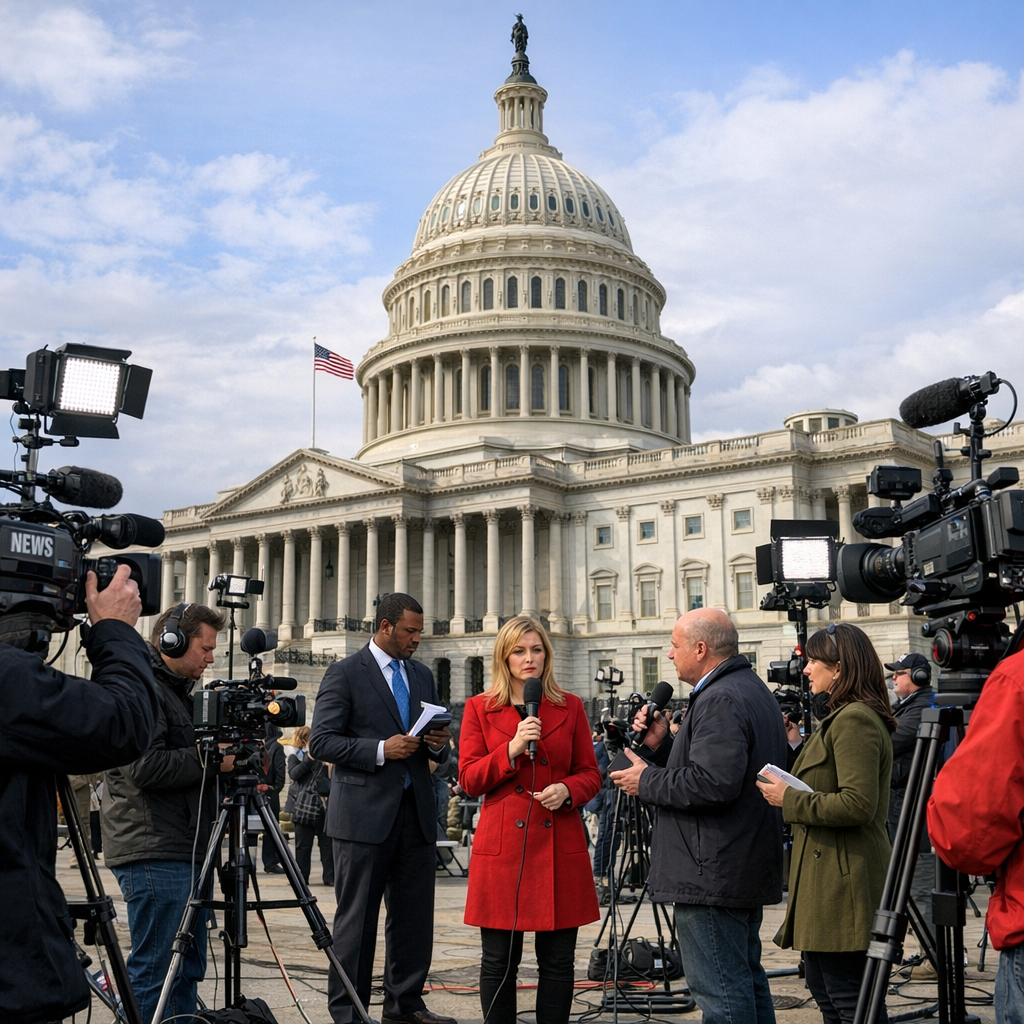
U.S. politics are increasingly shaped by clashes over press freedom. Major news outlets have filed lawsuits against the federal government after being barred from certain White House areas, citing First Amendment rights. The dispute reflects broader concerns about transparency and government accountability. At the same time, broader legal battles are playing out over immigration enforcement, energy policy, and judicial oversight — creating tension between branches of government and between different levels of public authority.
What to Watch Going Forward
- Cost of living: Energy, housing, and healthcare prices are likely to remain closely watched by everyday Americans.
- Legislation and regulation: Laws on AI, trade, tariffs, and media access are being shaped now and will impact economic pathways and democratic norms.
- Midterm elections: The political mood is likely to influence upcoming campaigns, especially as economic sentiment and national priorities take center stage.
Overall, the U.S. finds itself balancing between change and continuity. Policies that aim at self-reliance and technological advancement must weigh against rising costs and concerns about democratic institutions. The coming months will test whether this balance holds — or shifts in unexpected ways.