

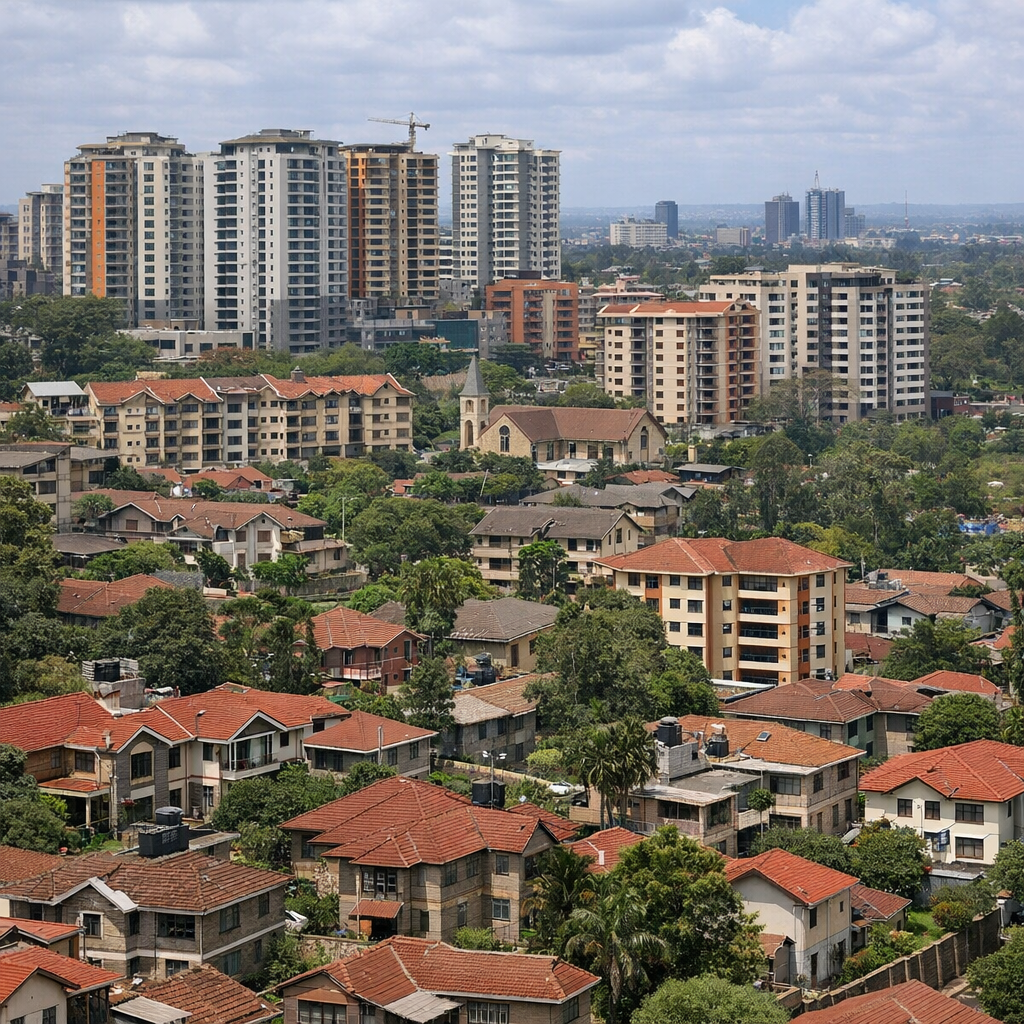
Nairobi’s real estate market is undergoing significant transformations, presenting both challenges and opportunities for residents and investors. Understanding the current trends is essential for making informed decisions.
Stabilization in Premium Suburbs
After years of rapid appreciation, property prices in upscale neighborhoods like Karen, Runda, and Muthaiga have plateaued. For instance, a 4-bedroom villa in Karen that sold for KES 80 million in 2024 is now trading between KES 72–78 million. This stabilization offers potential buyers room for negotiation and entry into previously inaccessible markets.
Thika Road Corridor: A New Hotspot
The Thika Superhighway corridor, encompassing areas from Garden Estate through Thome, Kahawa, and into Juja, has become a focal point for developers. New apartment complexes offer 1–2 bedroom units starting from KES 3.2 million, making it an affordable entry point into Nairobi’s property market. The completion of Garden City Mall, USIU’s expansion, and improved infrastructure have enhanced the area’s appeal to young professionals and small families.
Rental Market Dynamics
Kilimani continues to deliver some of the best rental yields in Nairobi, with 2-bedroom apartments renting for KES 65,000–95,000 per month against purchase prices of KES 8–15 million, resulting in a gross yield of around 8–10%. Westlands, particularly the Riverside Drive and Parklands corridors, remains popular with expatriates and corporate tenants, maintaining high occupancy rates.
Land Price Divergence
Land prices have shown varied trends. Prime land in Karen and Kitisuru has held its value, ranging from KES 35–50 million per half acre. Conversely, areas like Ruiru, Athi River, and Joska have experienced a 10–15% decline due to oversupply from speculative subdivisions.
Apartment Market Insights
Apartments dominate Nairobi’s residential market, representing about 71.1% of properties for sale by December 2025. The average value for 1–3 bedroom apartments was approximately KES 12.7 million by March 2026. However, market performance varies by area; Kilimani apartments showed positive year-on-year growth by Q1 2026, while Westlands, Riverside, and Lavington remained weaker. Notably, Riverside apartment rents rose about 12.1% year-on-year, whereas Westlands and Kileleshwa rents softened.
Emerging Investment Hotspots
Neighborhoods along the Thika Superhighway continue to benefit from expanding infrastructure, educational institutions, and commercial developments, making the corridor attractive for both owner-occupiers and investors. Additionally, satellite towns such as Ruiru, Juja, Syokimau, and Kitengela continue to attract buyers seeking affordability and long-term appreciation potential.
In conclusion, Nairobi’s real estate market is characterized by stabilization in premium suburbs, emerging hotspots along major corridors, and a dynamic rental landscape. Prospective buyers and investors should conduct thorough research and consider both current trends and long-term projections when making decisions.