

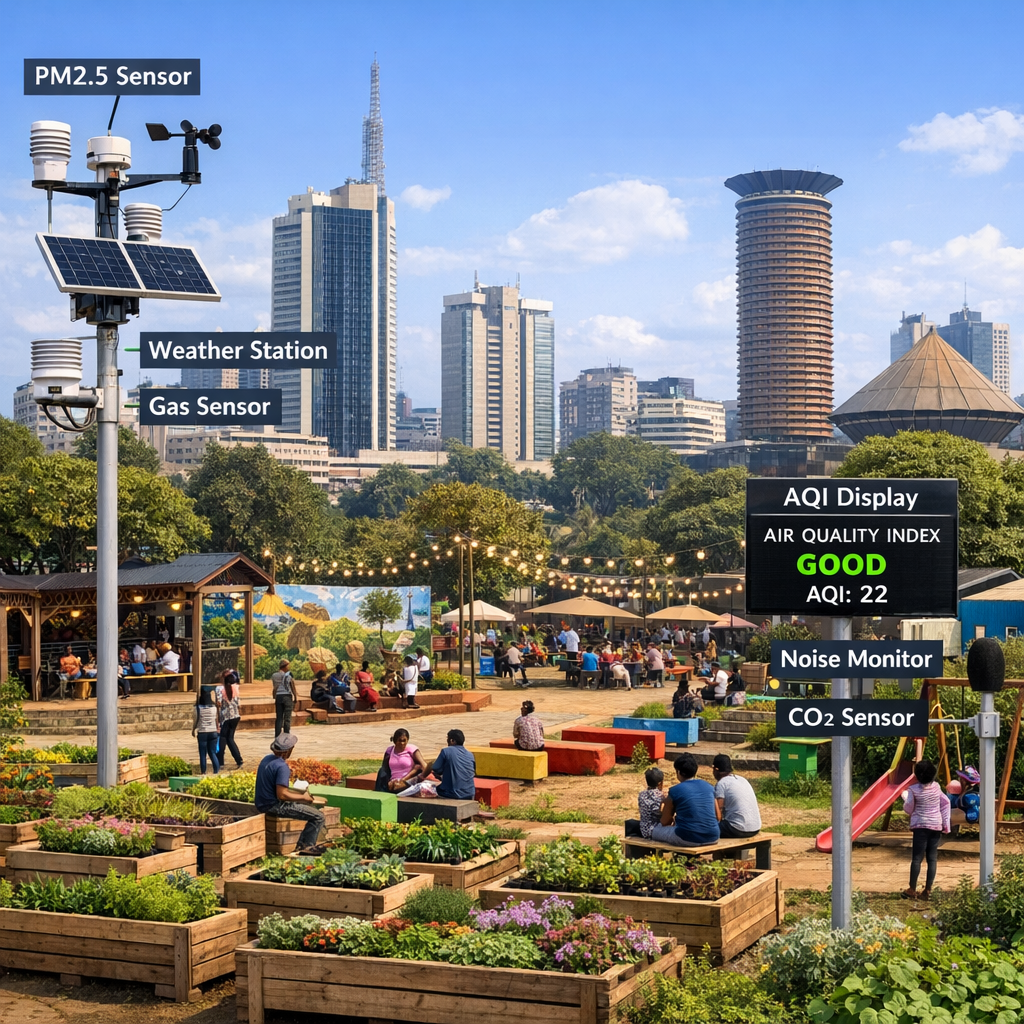
Nairobi is actively pursuing initiatives to enhance urban living conditions, focusing on air quality, waste management, and infrastructure development.
Air Quality Monitoring
In June 2025, the Nairobi City County government launched a state-of-the-art air quality monitoring network across the capital. This initiative aims to provide real-time data, identify pollution hotspots, guide policy decisions, and safeguard residents’ health. Governor Johnson Sakaja emphasized the importance of this milestone in ensuring cleaner and safer air for all Nairobi residents.
Waste Management Challenges
Informal settlements like Mathare face significant waste management challenges. Research indicates that inadequate solid waste management particularly impacts these areas, with waste from other parts of the city often ending up dumped in lower-income neighborhoods, creating environmental and health hazards for residents.
Infrastructure and Aesthetic Improvements
The Nairobi County Government has been proactive in improving the city’s infrastructure and aesthetics. In October 2025, property owners in prime areas were issued a final 14-day notice to repaint their properties and repair defective security lights. This directive aimed to restore the city’s visual appeal and ensure compliance with public health and housing standards.
Flood Resilience Initiatives
To address flooding issues, especially in informal settlements like Kibera, community-driven projects have been implemented. The Kibera Public Space Project focuses on building a network of community-designed and managed public spaces that reduce flood risk and provide residents with access to essential services.
These ongoing efforts reflect Nairobi’s commitment to creating a more livable and sustainable urban environment for its residents.