

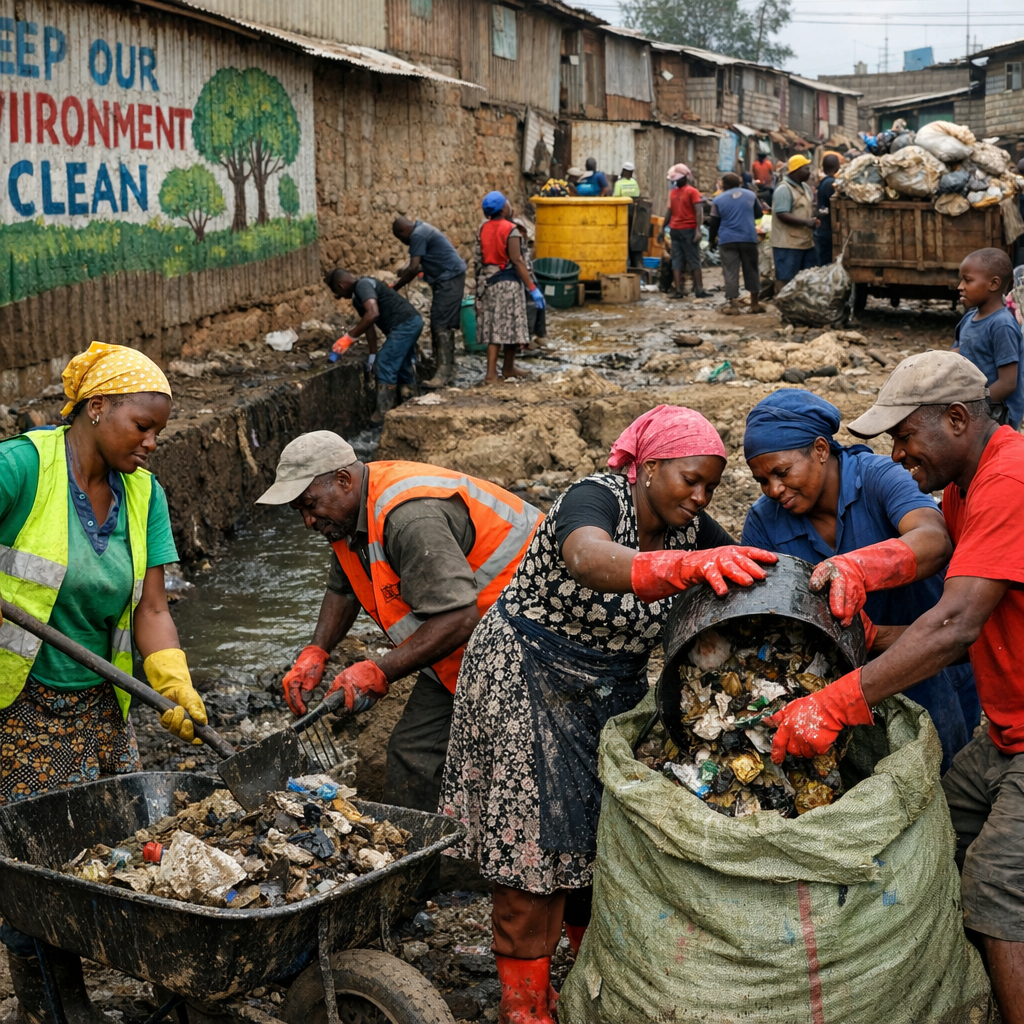
Nairobi’s informal settlements, including Kibera, Mukuru, and Mathare, face significant environmental challenges such as inadequate sanitation, unsafe drinking water, and ineffective waste management. These issues have profound impacts on residents’ health and quality of life.
Community-Led Sanitation Improvements
In Mukuru, community activism has led to sustainable improvements in sanitation infrastructure. Residents have collaborated with organizations to construct shared toilets and improve waste disposal systems, enhancing hygiene and reducing health risks.
Addressing Water Contamination
In Mathare, the Mathare Social Justice Centre has been at the forefront of advocating for access to clean water. The center works with residents to identify contamination sources and engage with authorities to improve water quality and distribution.
Innovative Waste Management Solutions
In Kibera, the Kounkuey Design Initiative (KDI) has partnered with the community to develop public spaces that incorporate waste management solutions. These projects include designated areas for waste collection and recycling, helping to reduce pollution and promote environmental sustainability.
Challenges and the Path Forward
Despite these efforts, challenges remain. Rapid urbanization and population growth continue to strain existing infrastructure. However, the success of community-driven initiatives demonstrates the potential for positive change when residents are empowered to take action. Continued support from local authorities and organizations is essential to scale these efforts and address the environmental challenges facing Nairobi’s informal settlements.