

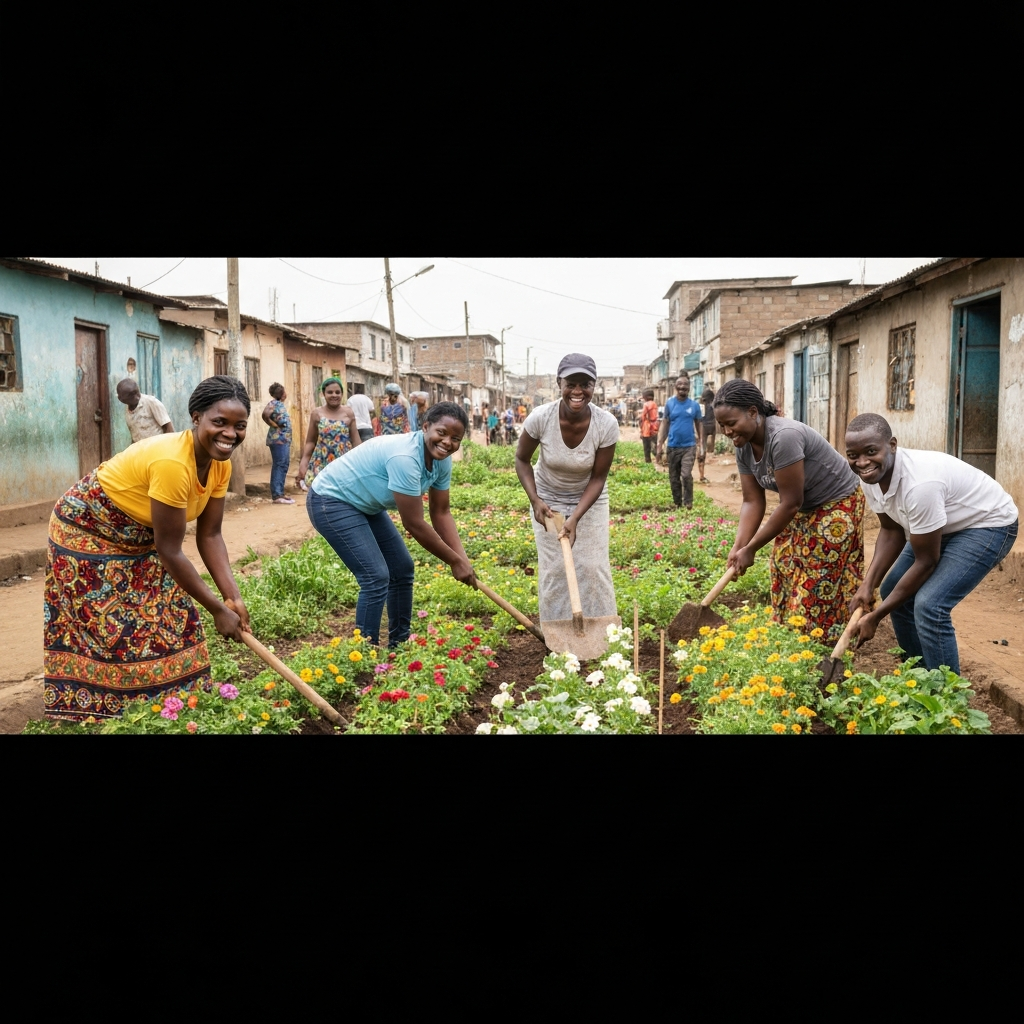
Nairobi’s informal settlements, home to a significant portion of the city’s population, have long faced challenges such as inadequate infrastructure, limited public spaces, and environmental degradation. However, recent community-led initiatives are bringing about transformative changes, enhancing the quality of life for residents.
Empowering Communities Through Public Space Development
In Kibera, one of Nairobi’s largest informal settlements, the Kounkuey Design Initiative (KDI) has been instrumental in co-creating public spaces that serve multiple purposes. These spaces integrate flood protection measures with essential services like sanitation facilities, community centers, and areas for small businesses. This holistic approach not only addresses environmental concerns but also fosters economic opportunities and social cohesion among residents.
Revitalizing River Ecosystems
The Ngong River, which traverses several informal settlements, has suffered from pollution and encroachment. The ‘Emphasising Ecosystems, Elevating People’ (3EP) project, led by KDI in partnership with UN-Habitat and ICLEI Cities Biodiversity Centre, focuses on regenerating the Ngong River Basin. By implementing nature-based solutions, the project aims to restore biodiversity, enhance climate resilience, and improve the well-being of communities living along the river.
Enhancing Urban Infrastructure
In the Mukuru settlements, the Block by Block Foundation, in collaboration with UN-Habitat and local organizations, has facilitated the creation of safe and inclusive public spaces. These efforts include improving sanitation, waste management, and green spaces, thereby addressing environmental and health challenges faced by residents. The participatory approach ensures that the community’s needs and aspirations are central to the development process.
Fostering Youth Engagement
The Youth City Project, operating in areas like Dandora, Korogocho, and Kamukunji, empowers young people to reclaim and transform neglected public spaces. By involving youth in the design and implementation of these projects, the initiative promotes creativity, social connection, and civic pride, while also addressing issues like unemployment and social exclusion.
These community-driven initiatives exemplify the power of local engagement in urban development. By prioritizing the needs and insights of residents, they not only improve infrastructure and environmental conditions but also strengthen the social fabric of Nairobi’s informal settlements.