

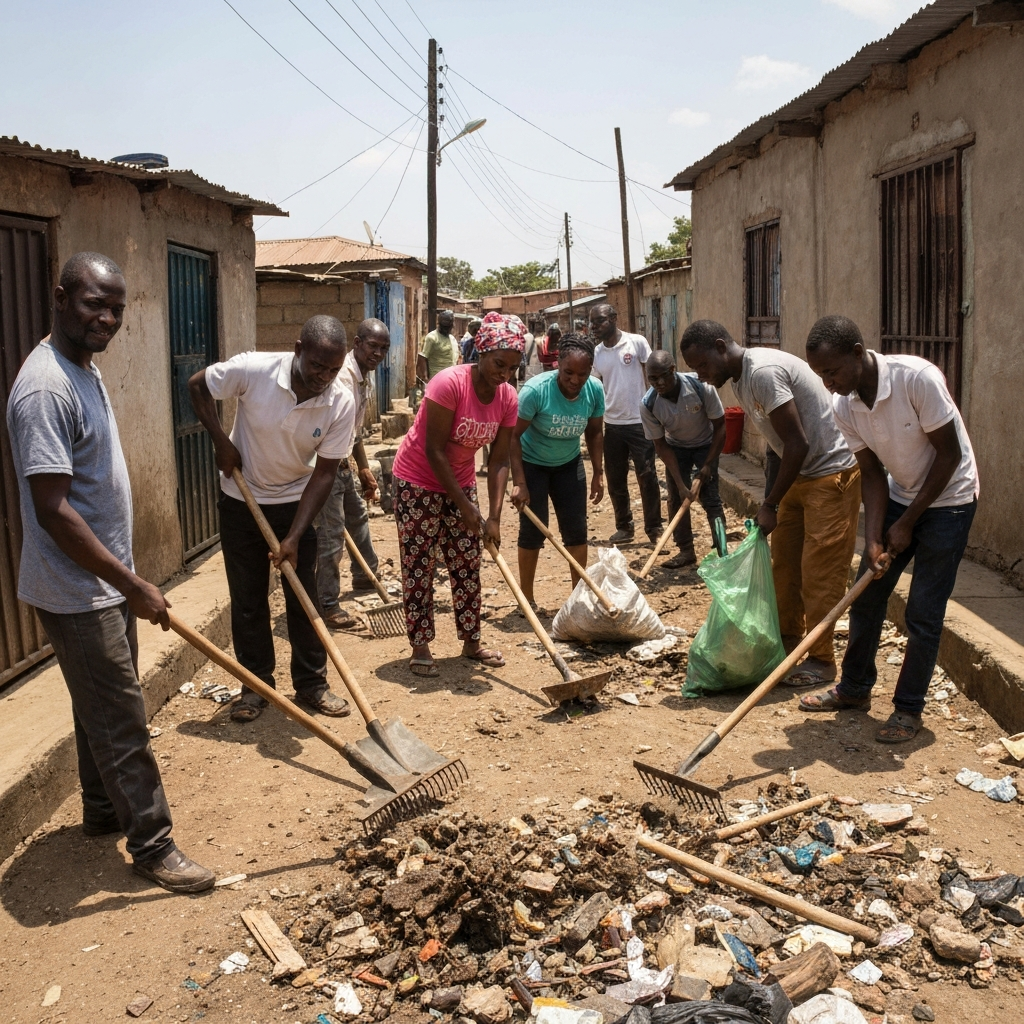
In Nairobi’s informal settlements, residents are taking proactive steps to address persistent sanitation and drainage issues that have long plagued their communities. Areas such as Kibera and Mathare Valley have faced challenges including inadequate waste disposal, poor drainage systems, and limited access to clean water, leading to significant health risks and environmental degradation.
Community-Led Sanitation Projects
In Kibera, the Kounkuey Design Initiative (KDI) has collaborated with local residents to develop public spaces that serve multiple purposes, including flood mitigation and provision of essential services. These community-designed spaces have not only reduced flood risks but also provided residents with access to clean water and sanitation facilities. For instance, newly constructed laundry pads allow women to perform household chores while supervising their children, enhancing both safety and convenience. [Source: WRI Ross Center for Sustainable Cities]
Addressing Waste Management
Residents of Kibera have raised concerns over uncollected garbage and inadequate waste management systems, which contribute to environmental pollution and health hazards. In response, community groups have initiated clean-up drives and awareness campaigns to promote proper waste disposal practices. These efforts aim to complement governmental initiatives and highlight the need for sustainable waste management solutions. [Source: Citizen Digital]
Improving Drainage Infrastructure
In Mathare Valley, residents have been actively involved in projects to improve drainage systems to prevent flooding and waterborne diseases. By participating in the construction and maintenance of drainage channels, the community has seen a reduction in flood-related incidents and improved overall sanitation. These initiatives demonstrate the effectiveness of community engagement in addressing infrastructural challenges. [Source: Population Matters]
Collaborative Efforts and Future Prospects
The success of these community-led initiatives underscores the importance of collaboration between residents, non-governmental organizations, and government agencies. By working together, these stakeholders can develop and implement sustainable solutions to the sanitation challenges facing Nairobi’s informal settlements. Continued support and investment in such projects are essential to ensure long-term improvements in public health and environmental conditions.
As these communities continue to advocate for better living conditions, their efforts serve as a testament to the power of grassroots initiatives in driving meaningful change. The progress made so far offers hope for a future where all Nairobi residents have access to adequate sanitation and a healthier living environment.